
Sickle Cell Association
P. O. Box 2751
Florissant, MO 63032
Phone: 314 833 6751
What's New
Sickle Cell Support Group
Join us Wednesday, March 9, 6:30p at 5615 Pershing, Ste 29, St. Louis, MO 63112 for our monthly support group meeting. Our guest speaker will be discussing avascular necrosis. Light refreshments will be served.
Call 314-833-6751 to RSVP.
Like us on Facebook and Follow us on Twitter!
The information on this
site is not intended to
diagnose, treat, mitigate,
cure or prevent any disease.
It should not be used in
lieu of sound judgment or
as a substitute for
professional medical care.
Facts About Sickle Cell Disease
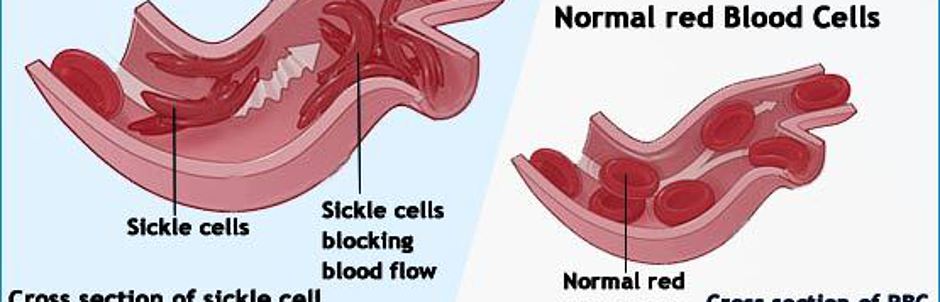
SCD is a group of inherited red blood cell disorders. Healthy red blood cells are round, and they move through small blood vessels to carry oxygen to all parts of the body. In someone who has SCD,
the red blood cells become hard and sticky and look like a C-shaped farm tool called a “sickle”. The sickle cells die early, which causes a constant shortage of red blood cells. Also, when they
travel through small blood vessels, they get stuck and clog the blood flow. This can cause pain and other serious problems such infection, acute chest syndrome and stroke.
Types of SCD
Following are the most common types of SCD:
HbSS
People who have this form of SCD inherit two sickle cell genes (“S”), one from each parent. This is commonly called sickle cell anemia and is usually the most severe form of the disease.
HbSC
People who have this form of SCD inherit a sickle cell gene (“S”) from one parent and from the other parent a gene for an abnormal hemoglobin called “C”. Hemoglobin is a protein that allows red blood cells to carry oxygen to all parts of the body. This is usually a milder form of SCD.
HbS beta thalassemia
People who have this form of SCD inherit one sickle cell gene (“S”) from one parent and one gene for beta thalassemia, another type of anemia, from the other parent. There are two types of beta thalassemia: “0” and “+”. Those with HbS beta 0-thalassemia usually have a severe form of SCD. People with HbS beta +-thalassemia tend to have a milder form of SCD.
There also are a few rare types of SCD:
HbSD, HbSE, and HbSO
People who have these forms of SCD inherit one sickle cell gene (“S”) and one gene from an abnormal type of hemoglobin (“D”, “E”, or “O”). Hemoglobin is a protein that allows red blood cells to carry oxygen to all parts of the body. The severity of these rarer types of SCD varies.
Diagnosis
SCD is diagnosed with a simple blood test. It most often is found at birth during routine newborn screening tests at the hospital. In addition, SCD can be diagnosed before birth.
Because children with SCD are at an increased risk of infection and other health problems, early diagnosis and treatment are important.
Content source: Sickle Cell Disease(SCD). http://www.cdc.gov/ncbddd/sicklecell/facts.html Center for Disease Control and Prevention. January 16, 2014.
 Print
Print 