
Sickle Cell Association
P. O. Box 2751
Florissant, MO 63032
Phone: 314 833 6751
What's New
Sickle Cell Support Group
Join us Wednesday, March 9, 6:30p at 5615 Pershing, Ste 29, St. Louis, MO 63112 for our monthly support group meeting. Our guest speaker will be discussing avascular necrosis. Light refreshments will be served.
Call 314-833-6751 to RSVP.
Like us on Facebook and Follow us on Twitter!
The information on this
site is not intended to
diagnose, treat, mitigate,
cure or prevent any disease.
It should not be used in
lieu of sound judgment or
as a substitute for
professional medical care.
Complications of SCD
People with sickle cell disease (SCD) start to have signs of the disease during the first year of life, usually around 5 months of age. Symptoms and complications of SCD are different for each person and can range from mild to severe.
The reason that infants don’t show symptoms at birth is because baby or fetal hemoglobin protects the red blood cells from sickling. When the infant is around 4 to 5 months of age, the baby or fetal hemoglobin is replaced by sickle hemoglobin and the cells begin to sickle.
There is no single best treatment for all people with SCD. Treatment options are different for each person depending on the symptoms.
Hand-Foot Syndrome
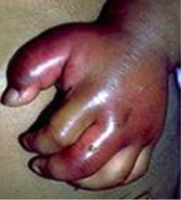
Swelling in the hands and feet usually is the first symptom of SCD. This swelling, often along with a fever, is caused by the sickle cells getting stuck in the blood vessels and blocking the flow of blood in and out of the hands and feet.
Treatment
The most common treatments for swelling in the hands and the feet are pain medicine and an increase in fluids, such as water.
Pain "Episode" or "Crisis"
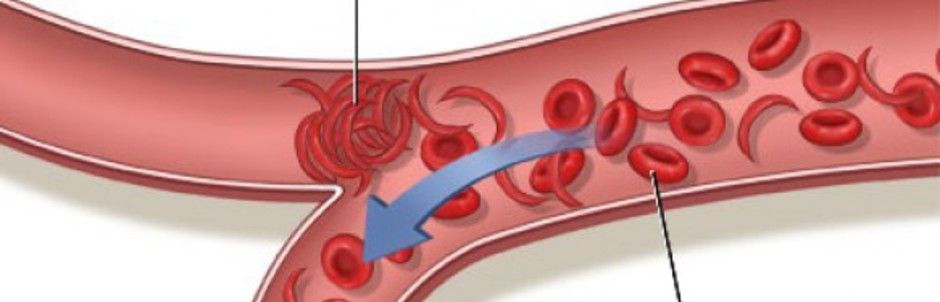
Pain is the most common complication of SCD, and the top reason that people with SCD go to the emergency room or hospital. When sickle cells travel through small blood vessels, they can get stuck and
clog the blood flow. This causes pain that can start suddenly, be mild to severe, and can last for any length of time.
Prevention
There are simple steps that people with SCD can take to help prevent and reduce the number of pain crises:
- Drink plenty of water.
- Try not to get too hot or too cold.
- Try to avoid places or situations that expose you to high altitudes (for example, flying, mountain climbing, or cities with a high altitude).
- Try to avoid places or situations that expose you to low oxygen levels (for example, mountain climbing or exercising extremely hard, such as in military boot camp or when training for an athletic competition).
- Adults with severe SCD can take a medicine called hydroxyurea to help reduce the number
of pain crises.
- People taking hydroxyurea must be checked often by a doctor because the medicine can cause serious side effects, including an increased risk of dangerous infections.
- New research has shown that babies and children with SCD also benefit from hydroxurea.
Treatment
Most pain related to SCD can be treated with over the counter pain medications such as ibuprofen and aspirin. Some people who have severe pain are given opioid (i.e. morphine) medications daily, along with additional pain medication. Some people may be admitted to the hospital for intense treatment.
Anemia
Anemia is a very common complication of SCD. With SCD, the red blood cells die early. This means there are not enough healthy red blood cells to carry oxygen throughout the body. When this happens, a person might have:
- Tiredness
- Irritability
- Dizziness and lightheadedness
- A fast heart rate
- Difficulty breathing
- Pale skin color
- Jaundice (yellow color to the skin and whites of the eyes)
- Slow growth
- Delayed puberty
Treatment
Blood transfusions are used to treat severe anemia. A sudden worsening of anemia resulting from infection or enlargement of the spleen is a common reason for a transfusion. Multiple blood transfusions, however, might cause health problems because of the iron content of blood. Iron overload, called hemosiderosis, can damage liver, heart, pancreas and other organs, leading to diseases such as diabetes mellitus. Iron chelation therapy should be started in patients with SCD receiving regular blood transfusions to reduce excess iron levels.
Infection
People with SCD, especially infants and children, are more at risk for infections, especially those due to bacteria with capsules because of damage to the spleen. Pneumonia is a leading cause of death in infants and young children with SCD.
Prevention
Vaccines can protect against harmful infections.
- Adults with SCD should have the flu vaccine every year, as well as the pneumococcal and meningococcal vaccine as well as any others recommended by a doctor.
Treatment
Infections are treated with antibiotic medicines and sometimes blood transfusions. At the first sign of an infection, such as a fever, it is important to see a doctor right away as this may represent a medical emergency for people with SCD. Early treatment of infection can help prevent problems.
Acute Chest Syndrome
This can be life-threatening and should be treated in a hospital. Symptoms and signs are similar to pneumonia. Signs and symptoms include chest pain, coughing, difficulty breathing, and fever.
Prevention
Adults with severe SCD can take a medicine called hydroxyurea to help prevent acute chest syndrome. People taking hydroxyurea must be watched closely because the medicine can cause serious side effects, including a low white blood cell count which increases the risk of dangerous some types of infections.
A person who is on bed rest or has recently had surgery can use an incentive spirometer, also called "blow bottle," to help prevent acute chest syndrome.
Treatment
Depending on the cause, treatment might include oxygen, medicine to treat an infection, medicine to open up airways to improve air, and blood transfusions.
Splenic Sequestration
This can be life-threatening and should be treated in a hospital. It happens when a large number of sickle cells get trapped in the spleen and cause it to suddenly get large. Symptoms include sudden weakness, pale lips, fast breathing, extreme thirst, abdominal (belly) pain on the left side of body, and fast heartbeat.
Parents of a child with SCD should learn how to feel and measure the size of their child’s spleen and seek help if the spleen is enlarged.
Prevention
For those who have had a very severe, life-threatening episode of splenic sequestration or who have had many episodes in the past, it might be necessary to have regular blood transfusions or the spleen can be removed (called splenectomy) to stop it from happening again.
Treatment
Treatment typically is a blood transfusion. This should be done in consultation with a blood specialist as patients sometimes become overloaded with fluid when the blood is released from the spleen. Removal of blood may be necessary to prevent this from happening.
Vision Loss
Vision loss, including blindness, can occur when blood vessels in the eye become blocked with sickle cells and the retina (the thin layer of tissue inside the back of the eye) gets damaged. Some patients develop extra blood vessels in the eye from the lack of oxygen.
Prevention
People with sickle cell disease should have their eyes checked every year to look for damage to the retina. If possible, this should be done by an eye doctor who specializes in diseases of the retina.
Treatment
If the retina is damaged by excessive blood vessel growth, laser treatment often can prevent further vision loss.
Leg Ulcers
This usually occurs on the lower part of the leg. They happen more often in males than in females and usually appear from 10 through 50 years of age. A combination of factors cause ulcer formation, including trauma, infection, inflammation, and interruption of the circulation in the smallest blood vessels of the leg.
Treatment
Leg ulcers can be treated with medicated creams and ointments. Leg ulcers can be painful, and patients can be given strong pain medicine. Management of leg ulcers could also include the use of cultured skin grafts. This treatment is provided in specialized centers. Bed rest and keeping the leg (or legs) raised to reduce swelling is helpful, although not always possible.
Stroke
A stroke can happen if sickle cells get stuck in a blood vessel and clog blood flow to the brain. About 10% of children with SCD will have a symptomatic stroke. Stroke can cause learning problems and lifelong disabilities.
Prevention
Children who are at risk for stroke can be identified using a special type of
exam called, transcranial Doppler ultrasound (TCD). If the child is found to have an abnormal TCD, a doctor might recommend frequent blood transfusions to help prevent a stroke. People who have
frequent blood transfusions must be watched closely because there are serious side effects. For example, too much iron can build up in the body, causing life-threatening damage to the
organs.
Deep Vein Thrombosis (DVT) and Pulmonary Embolism (PE)
Sickling of red cells can increase blood coagulation and induce an increased risk of blood clot in a deep vein (DVT), or in the lung (PE) if the blood clot moves from the deep veins. People with SCD have a high chance of developing DVT or PE. DVT and PE can cause serious illness, disability and, in some cases, death.
Prevention and Treatment
Medication is used to prevent and treat DVT and PE. PE requires immediate medical attention.
Other Possible Complications
- Damage to body organs (like the liver, heart, or kidneys), tissues, or bones because not enough blood is flowing to the affected area(s)." Insert as second bullet: "Malnutrition and growth retardation among adolescents can cause a delayed onset of puberty and, in males, infertility.
- Gallstones.
- Painful erection of the penis, called priapism, can last less than 2 hours or more than 4 hours. If it lasts more than 4 hours, the person should get urgent medical help. It can lead to impotence.
Complications of SCT
Most people with SCT do not have any symptoms of SCD, although—in rare cases—people with SCT might experience complications of SCD, such as pain crises.
In their extreme form, and in rare cases, the following conditions could be harmful for people with SCT:
- Increased pressure in the atmosphere (which can be experienced, for example, while scuba diving).
- Low oxygen levels in the air (which can be experienced, for example, when mountain climbing, exercising extremely hard in military boot camp, or training for an athletic competition).
- Dehydration (for example, when one has too little water in the body).
- High altitudes (which can be experienced, for example, when flying, mountain climbing, or visiting a city at a high altitude).
More research is needed to find out why some people with SCT have complications and others do not.
Content source: Sickle Cell Disease(SCD). http://www.cdc.gov/ncbddd/sicklecell/treatments.html Center for Disease Control and Prevention. January 17, 2014.
 Print
Print 